
Facial Mapping for Injectors: The Foundation of Precise Neurotoxin Treatments
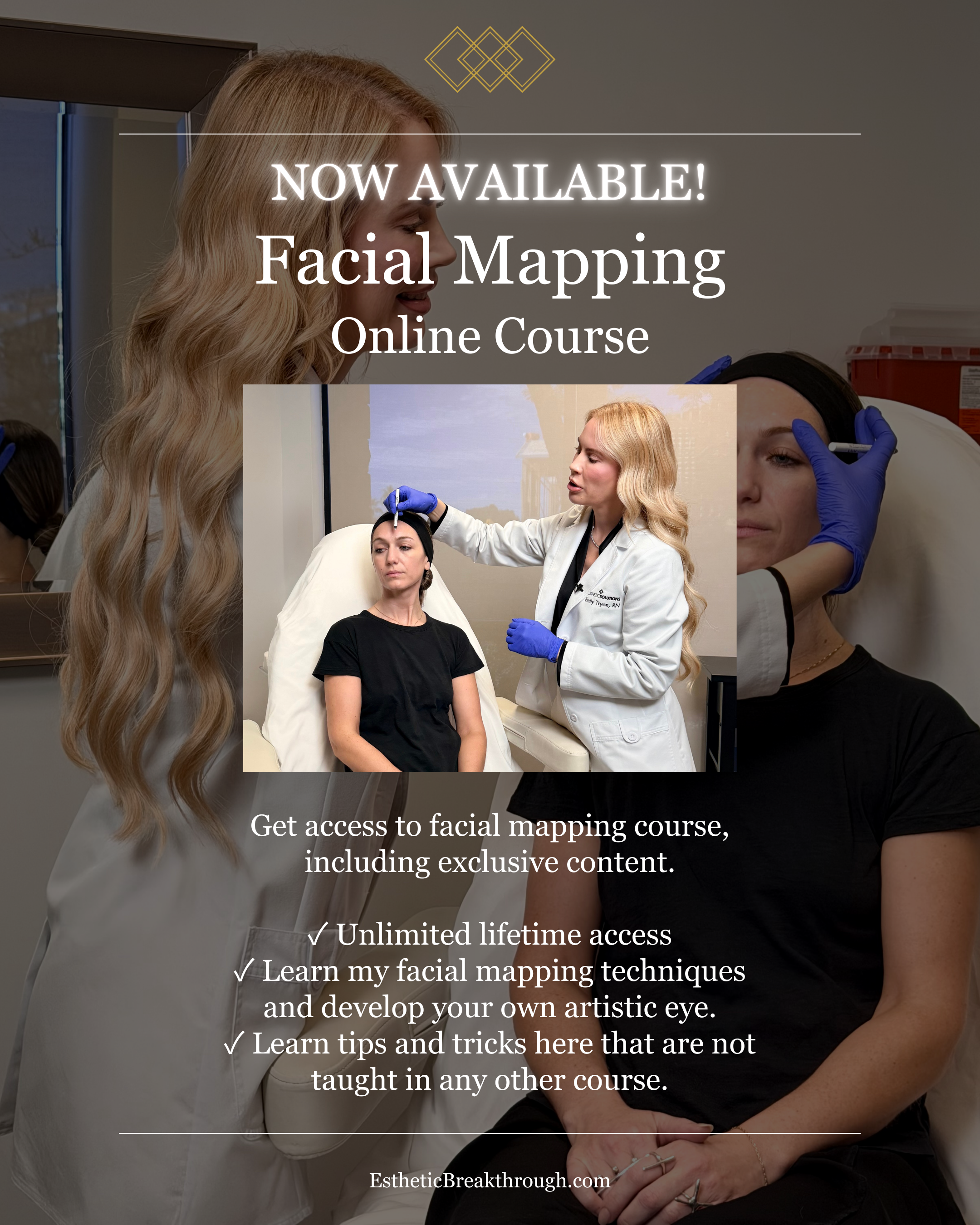
In aesthetic medicine, the outcome of an injectable treatment is often determined long before the first unit of neurotoxin is placed.
Experienced injectors understand that every treatment begins with observation—studying the patient’s facial anatomy, evaluating dynamic muscle movement, and identifying the structural relationships that influence expression and aging.
This process is known as facial mapping, and it is one of the most valuable skills an aesthetic injector can develop.
Facial mapping allows providers to evaluate the face systematically before performing treatments with neuromodulators such as Botox. By studying facial balance, muscle activity, and anatomical landmarks, injectors can design treatment plans that align with each patient’s unique facial structure.
For many injectors, developing a consistent mapping process transforms how they approach consultations and treatment planning.
Why Facial Mapping Is Essential in Aesthetic Medicine
Cosmetic injections exist at the intersection of clinical science and artistic interpretation.
While product knowledge and injection technique are important, injectors must also understand how facial anatomy and muscle movement interact to create expression and aging patterns.
Without facial mapping, treatments often become reactive—focused only on visible wrinkles or folds rather than the underlying anatomical causes.
Facial mapping allows injectors to evaluate:
• Facial symmetry and proportions
• Dynamic muscle movement during expression
• Structural support across the midface and lower face
• Age-related anatomical changes
• Balance between facial features
By understanding these elements before treatment begins, injectors can make more informed decisions about neurotoxin placement and dosage.
From Treating Lines to Designing Outcomes
One of the most common challenges for newer injectors is shifting from treating individual lines to designing comprehensive aesthetic outcomes.
Facial mapping encourages injectors to analyze the entire face rather than isolated treatment areas.
For example, the appearance of forehead lines may be influenced by brow position and muscle compensation. Similarly, chin movement and platysmal bands can affect lower face balance and neck aesthetics.
By evaluating these relationships through facial mapping, injectors gain a clearer understanding of how each treatment area interacts with the rest of the face.
This broader perspective helps providers create more harmonious and natural-looking results.
The Role of Facial Mapping in Neurotoxin Treatments
Neuromodulators work by temporarily relaxing specific facial muscles. Because these muscles interact with one another, precise placement is critical to maintaining natural expression.
Facial mapping helps injectors identify:
• Dominant muscle activity in the upper face
• Asymmetry between muscle groups
• Compensatory muscle patterns
• Areas of excessive contraction
• Regions that require conservative dosing
By mapping these patterns before treatment, injectors can approach neurotoxin placement with greater precision and confidence.
Developing a Structured Facial Mapping Process
Many injectors initially rely on instinct or visual assessment when evaluating the face.
However, developing a repeatable facial mapping process allows providers to approach each consultation with consistency.
A structured mapping approach typically involves assessing the face in stages:
Upper Face – Observing frontalis activity, brow position, and glabellar muscle movement.
Midface – Evaluating structural support, cheek contour, and facial proportions.
Lower Face – Assessing chin projection, perioral muscle activity, and jawline balance.
Neck – Identifying platysmal band movement and lower face interaction.
By following this systematic evaluation, injectors can identify the anatomical patterns that influence aesthetic outcomes.
Facial Mapping as a Skill for Long-Term Injector Growth
As injectors gain experience, many discover that the most significant improvements in their outcomes come not from injecting more—but from seeing more.
The ability to observe subtle differences in facial structure, movement, and symmetry allows providers to design treatments that feel balanced and intentional.
Facial mapping strengthens this observational skill.
It encourages injectors to slow down, analyze the face carefully, and approach aesthetic medicine with a deeper level of clinical awareness.
For med spa providers and aesthetic professionals, developing a facial mapping framework can enhance consultation quality, improve patient communication, and lead to more consistent treatment outcomes.
Learn the Facial Mapping Framework Used by Emily Tryon, RN
To help injectors refine this critical skill, Emily Tryon, RN, founder of Esthetic Breakthrough, has developed a structured training designed specifically for aesthetic providers.
The Facial Mapping Online Course teaches injectors how to evaluate facial anatomy and muscle movement before performing neurotoxin treatments. The course walks through facial assessment techniques for the upper face, midface, lower face, and platysmal bands.
Through this training, injectors gain a repeatable framework they can integrate into consultations and treatment planning.
For providers who want to improve their aesthetic assessments and strengthen their treatment strategy, facial mapping is a skill that elevates every injection.
Esthetic Breakthrough offers several online training courses for cosmetic injectors to learn advanced techniques from any place, and at any time.