
Liquid Rhinoplasty Training: Why Advanced Skills, Anatomy, and Hands-On Education Matters
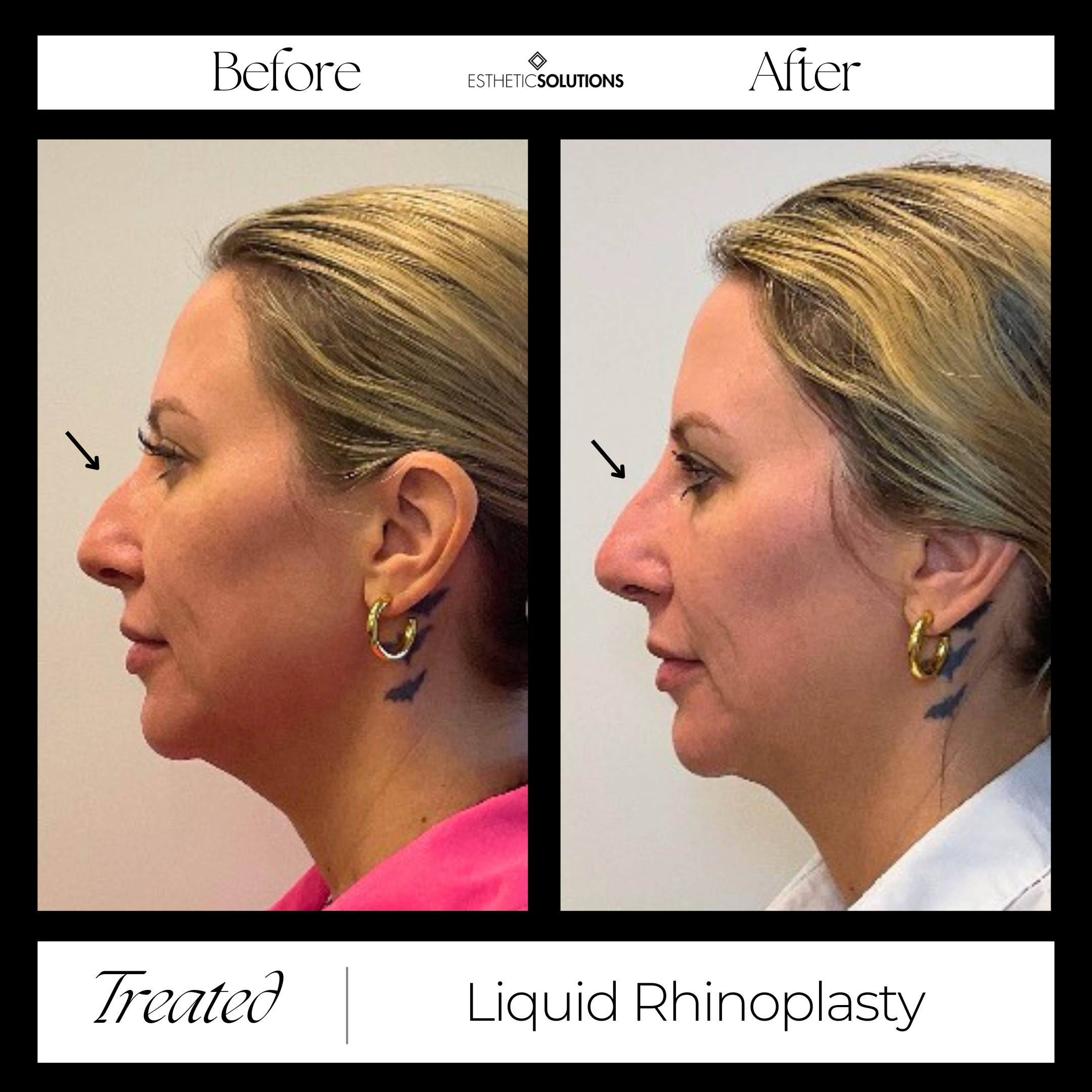
Liquid rhinoplasty has become an increasingly recognized option for patients seeking subtle nasal refinements without surgery. Using strategically placed dermal filler, experienced cosmetic injectors may be able to improve the appearance of a nasal hump, create a straighter-looking bridge, refine the nasal tip, and enhance overall facial balance.
But behind these seemingly small adjustments lies one of the most technically demanding and potentially dangerous procedures in aesthetic medicine.
Liquid rhinoplasty is not simply another dermal filler treatment. It is an advanced procedure that requires extensive anatomical knowledge, clinical experience, careful patient selection, and specialized hands-on training.
For Emily Tryon, RN, Founder of Esthetic Breakthrough and a nationally recognized cosmetic injector and educator, understanding these risks is the foundation of learning how to perform non-surgical rhinoplasty.
Her message to aspiring liquid rhinoplasty injectors is clear:
"This is most definitely not something you can learn from watching online videos." — Emily Tryon, RN
What Is Liquid Rhinoplasty?
Liquid rhinoplasty, also called non-surgical rhinoplasty or non-surgical nose enhancement, is a cosmetic procedure that uses injectable dermal fillers to modify the appearance of the nose without surgery.
Unlike surgical rhinoplasty, which can reshape or remove underlying structures, liquid rhinoplasty adds volume strategically to create the appearance of improved contours and proportions.
What Can Liquid Rhinoplasty Address?
Depending on a patient's anatomy and aesthetic goals, liquid rhinoplasty may help:
Smooth the appearance of a dorsal hump or nasal bump
Create the appearance of a straighter nasal bridge
Improve the appearance of nasal tip projection or definition
Enhance profile balance and facial proportions
Camouflage certain minor contour irregularities
The objective is not necessarily to make the nose smaller, but to create greater visual harmony with the patient's natural facial features.
However, liquid rhinoplasty is not appropriate for every patient. It cannot reduce the actual size of the nose, correct all structural concerns, or replace surgical rhinoplasty when surgery is indicated.
Knowing when not to treat is just as important as knowing how to treat.
Why Is Liquid Rhinoplasty Considered a High-Risk Injectable Procedure?
The nose is one of the most vascularly complex areas of the face, with blood vessels connected to the ophthalmic circulation.
This makes nasal filler injections particularly high risk.
When dermal filler enters or compresses a blood vessel, it can disrupt blood flow and cause a vascular occlusion. Depending on the location and severity, complications may include tissue ischemia, skin necrosis, permanent scarring, and, in rare but devastating cases, irreversible vision loss.
Understanding Nasal Vascular Anatomy
Successful injector training requires more than memorizing facial anatomy from a textbook.
Injectors must understand the nasal vascular network, the anatomical variations that can exist between patients, and how those differences influence procedural risk.
The nasal region has vascular connections involving branches of the facial and ophthalmic arterial systems.
Inadvertent intra-arterial filler injection can allow material to travel toward vessels supplying the eye, potentially causing retinal arterial occlusion and permanent blindness.
This is why an advanced understanding of vascular anatomy is essential before considering liquid rhinoplasty training.
No injection technique can eliminate these risks entirely.
Why Injector Experience Matters
One of the greatest concerns with liquid rhinoplasty is the misconception that an injector who is comfortable performing routine filler treatments is automatically prepared to treat the nose.
That is not the case.
Experience injecting lips, cheeks, or nasolabial folds does not independently qualify someone to perform non-surgical rhinoplasty.
The nose presents unique anatomical challenges, limited margins for error, and potentially catastrophic complications.
Emily emphasizes that liquid rhinoplasty requires a different level of clinical judgment, anatomical understanding, and procedural preparation.
Why Hands-On Liquid Rhinoplasty Training Is Essential
Online education has made advanced aesthetic training more accessible than ever. While online courses can provide valuable foundational knowledge, they cannot replace supervised practical instruction for high-risk injectable procedures.
Watching a video is not the same as developing the clinical judgment required to safely assess, plan, and manage a complex nasal filler treatment.
What Online Videos Cannot Teach You
Videos may demonstrate injection approaches or describe anatomical landmarks, but they cannot independently establish whether an injector is competent to perform the procedure.
They also cannot adequately reproduce the experience of evaluating individual patient anatomy, making real-time clinical decisions, or responding to complications under experienced supervision.
Emily is especially direct about this distinction:
"You must have hands-on training for this. You can't ask Facebook. You can't watch a YouTube video."
For advanced procedures such as liquid rhinoplasty, education must go beyond observing someone else's technique.
The Importance of Supervised Clinical Education
Comprehensive liquid rhinoplasty training should emphasize:
Detailed nasal and facial vascular anatomy
Appropriate patient selection and contraindications
Individualized assessment and treatment planning
Understanding filler characteristics and procedural limitations
Recognition of vascular compromise and other complications
Emergency preparedness, escalation, and referral protocols
Post-treatment assessment, patient instructions, and follow-up
Supervised practical training with a qualified educator
An injector's ability to recognize complications, respond promptly, and understand when treatment should not proceed is fundamental to responsible practice.
Who Is Qualified to Take Advanced Liquid Rhinoplasty Training?
Liquid rhinoplasty is not an introductory cosmetic injection course.
Emily carefully evaluates prospective participants before accepting them into her training, which is the reason this is not offered as an Esthetic Breakthrough online training course.
Her preference is generally for injectors with three to six years of cosmetic injectable experience, although experienced full-time injectors with approximately two to three years of practice may be invited to submit an application for individual review.
Why Experience Is a Prerequisite
Years of experience alone do not establish competency.
An injector's clinical background, depth of anatomical knowledge, procedural experience, ability to manage complications, and professional scope of practice must all be considered.
The objective of screening is to determine whether the applicant has an appropriate foundation for advanced education.
Emily's philosophy is straightforward:
Advanced procedures require advanced preparation.
Patient Safety Does Not End When the Injection Is Complete
One of the most important components of liquid rhinoplasty education is understanding that procedural responsibility extends beyond the final injection.
Because vascular complications can become apparent during or after treatment, injectors must be prepared to recognize concerning symptoms, initiate appropriate emergency responses, and provide clear post-treatment instructions.
Why Post-Treatment Assessment Matters
Emily emphasizes a specific post-procedure assessment process within her training, focused on evaluating vascular concerns and identifying potential complications.
This is an important distinction in her educational approach.
However, no post-treatment assessment can guarantee that a patient will remain free of complications over the following 24 hours.
A comprehensive safety approach includes appropriate observation, patient education, clear emergency contact instructions, and established protocols for urgent evaluation when warning signs arise.
Symptoms such as unusual or escalating pain, skin blanching or discoloration, visual changes, or other concerning findings require immediate attention.
Sudden visual symptoms following filler injection constitute a medical emergency.
For Emily, the responsibility of an injector is not simply to achieve an aesthetic result. It is to prioritize patient safety throughout the entire treatment experience.
The Art and Responsibility of Non-Surgical Nose Enhancement
Although liquid rhinoplasty carries significant risk, it can also be a rewarding area of advanced aesthetic practice for appropriately qualified and trained clinicians.
The procedure requires an understanding of how even subtle changes in nasal contours can influence the balance of the entire face.
Treating the Patient, Not Just the Nose
A successful aesthetic consultation considers more than an isolated feature.
The relationship between the nose, chin, lips, cheeks, and overall facial profile can influence whether a proposed treatment is appropriate.
An experienced injector evaluates the complete facial structure and determines whether filler can reasonably address the patient's concerns.
This requires both technical knowledge and artistic judgment.
It also requires the confidence to recommend an alternative approach—or decline treatment—when the risks outweigh the potential benefits.
The mark of an advanced injector isn't how many procedures they can perform. It's knowing which procedures are appropriate for each patient.
Learn Liquid Rhinoplasty With Emily Tryon, RN
With more than 25 years of experience in vascular and aesthetic medicine, Emily Tryon brings a clinical perspective to advanced injector education.
As the Founder of Esthetic Breakthrough, she is committed to helping experienced aesthetic professionals refine their skills, deepen their anatomical knowledge, and develop greater confidence in clinical decision-making.
Her Liquid Rhinoplasty Method focuses on the advanced knowledge required to evaluate non-surgical nasal enhancement, understand the risks involved, and approach this complex treatment with appropriate caution.
Apply for Advanced Liquid Rhinoplasty Training
If you're an experienced cosmetic injector interested in expanding your education into non-surgical rhinoplasty, the first step is determining whether this advanced training is appropriate for your background.
Prospective participants are encouraged to review the course information and complete the intake process for consideration.
Liquid rhinoplasty is not a technique to learn casually. It demands experience, education, respect for vascular anatomy, and a commitment to patient safety.
For the right injector, advanced training is an opportunity to strengthen both technical understanding and clinical judgment.
Ready to take the next step in your injector education?
Explore the Liquid Rhinoplasty Method & Apply for Training →
Esthetic Breakthrough Training®
Advanced Aesthetic Injector Education with Emily Tryon, RN
Questions about training eligibility? Call 480-405-6338.