
How Emily Tryon Is Using PDGF for Tear Troughs, Neck Rejuvenation & Hair Restoration
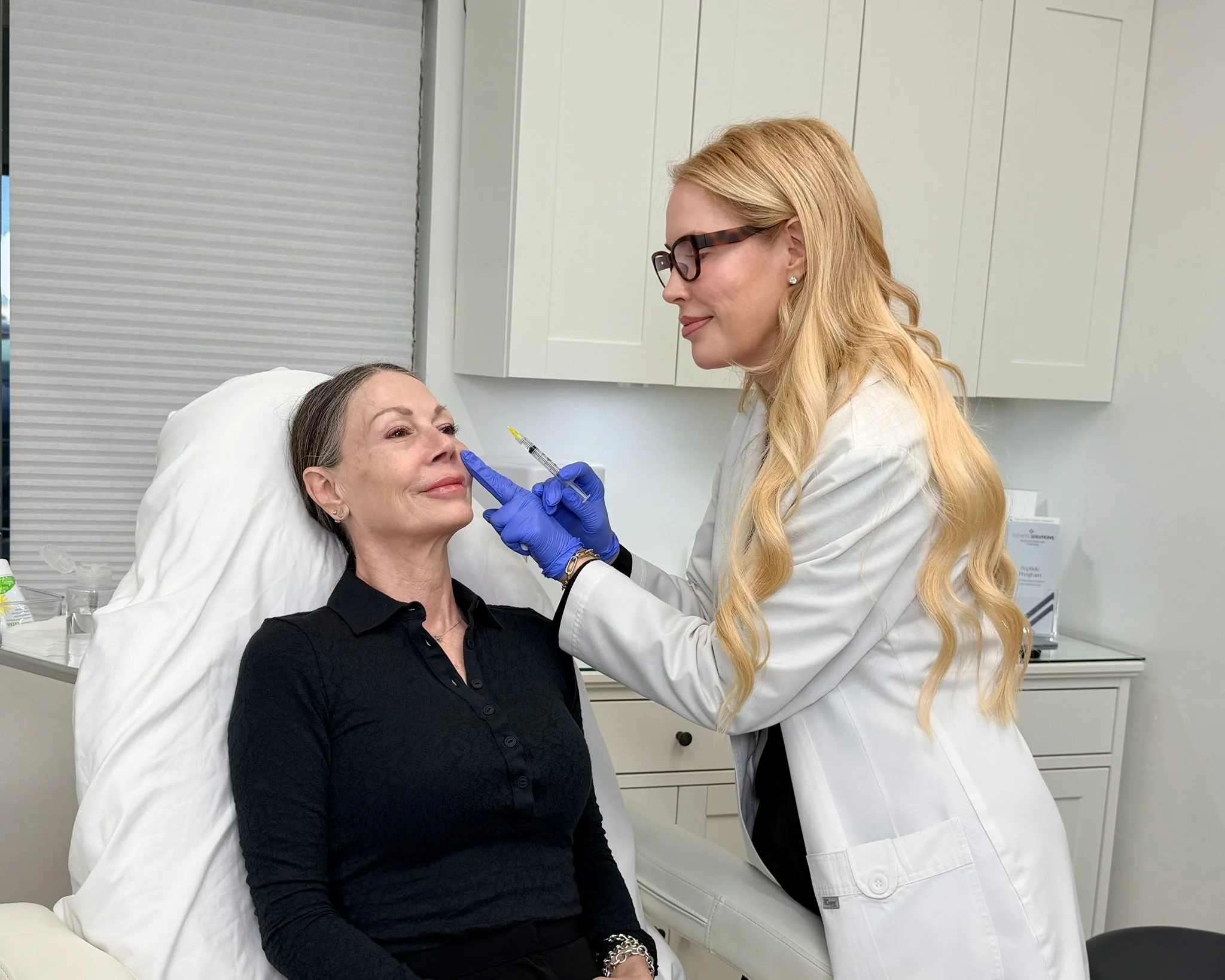
How I am Incorporating PDGF Into My Aesthetic Treatments
Regenerative aesthetics continues to evolve… and injectors who understand where the industry is moving will be better positioned to create natural-looking outcomes while expanding treatment options for patients who may not be ideal candidates for traditional filler.
One of the most exciting additions to this category is PDGF (Platelet-Derived Growth Factor).
As patient demand shifts toward regenerative treatments, collagen stimulation, and tissue quality improvement, PDGF is becoming an increasingly valuable tool inside med spas and clinics.
At Esthetic Solutions, I began integrating PDGF into multiple treatment areas, including:
• Tear trough rejuvenation
• Neck rejuvenation with hyper-dilute Radiesse
• Hair restoration treatments
This is not about replacing filler.
It’s about expanding your ability to treat tissue quality, collagen depletion, and regenerative concerns with more precision.
What Is PDGF in Aesthetic Medicine?
PDGF (Platelet-Derived Growth Factor) is a regenerative growth factor treatment designed to support:
Cellular repair
Tissue regeneration
Collagen stimulation
Improved skin quality
Follicular support in hair restoration
Unlike traditional hyaluronic acid fillers that primarily restore volume, PDGF focuses on improving the quality and integrity of the tissue itself.
This distinction is important.
As injectors, we know many aesthetic concerns are not solely volume loss problems. In many patients, the issue is:
Skin thinning
Poor tissue quality
Collagen depletion
Elasticity loss
Structural aging
This is where regenerative treatments are becoming increasingly valuable.
Why More Injectors Are Exploring Regenerative Aesthetic Treatments
Patients today are becoming more educated and more selective.
Many are specifically asking for:
Natural-looking rejuvenation
Collagen stimulation
Regenerative aesthetics
Non-surgical treatment options
Alternatives to overfilled outcomes
This shift is changing treatment planning.
Instead of simply asking:
“How do we fill this?”
The better clinical question is often:
“How do we improve the tissue itself?”
PDGF allows injectors to approach aging through a more regenerative lens.
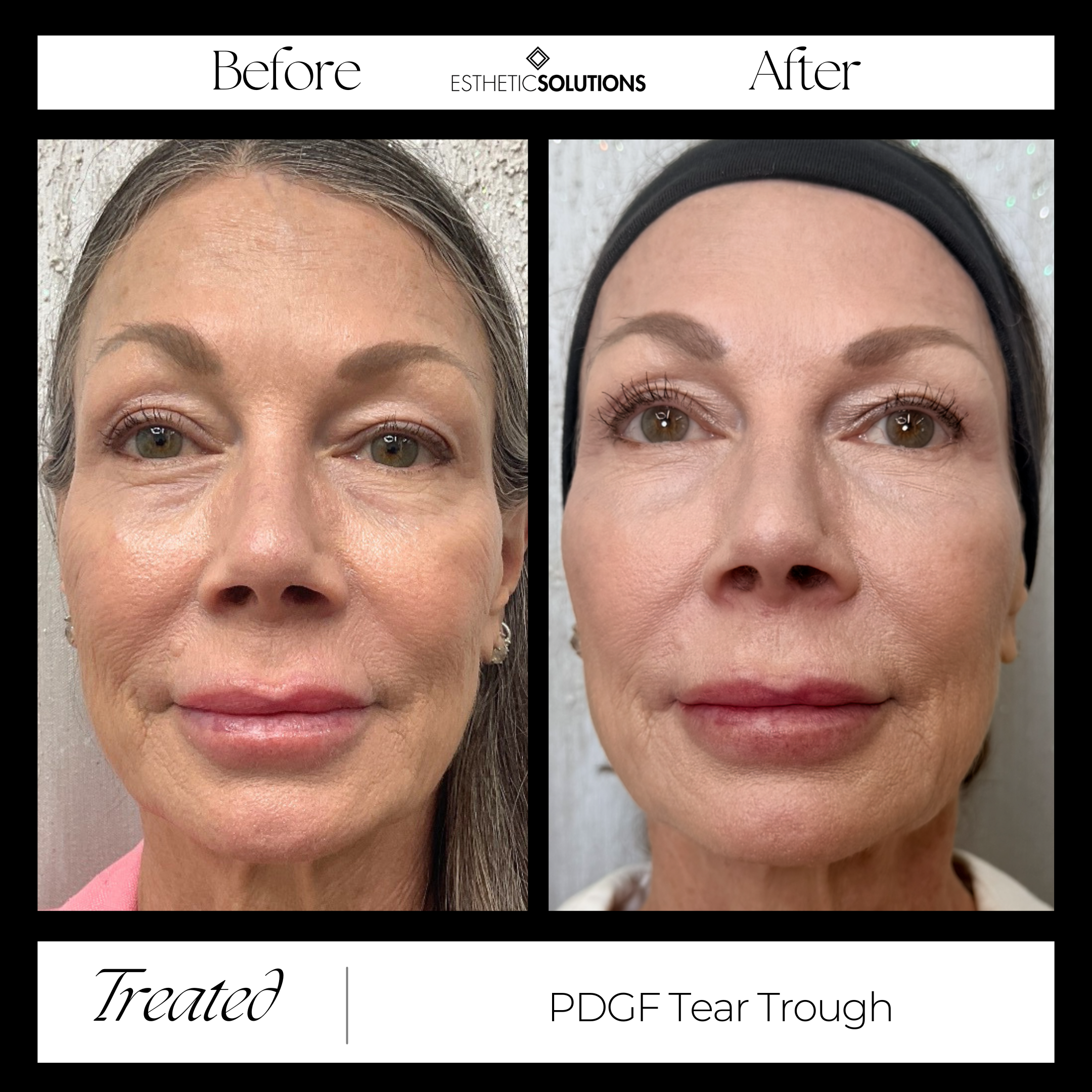
PDGF for Tear Trough Rejuvenation
The tear trough remains one of the most technically demanding areas in aesthetic treatments.
Thin skin, vascular anatomy, edema risk, and limited structural support make this area highly unforgiving.
While tear trough filler can still be appropriate for select patients, not every under-eye concern is truly a volume deficiency issue. PDGF injections to treat tear troughs is a highly effective alternative.
Why Use PDGF for Tear Troughs
PDGF allows treatment focus to shift toward:
Tissue quality improvement
Collagen support
Skin thickening
Crepey under-eye skin
Hollowing associated with tissue degeneration
Clinically, this may help:
Reduce translucency beneath the eyes
Improve under-eye skin texture
Support healthier tissue quality
Create smoother integration in delicate anatomy
Why Regenerative Under-Eye Treatments Matter
Many patients today are concerned about:
Filler migration
Puffiness
Tyndall effect
Overfilled under eyes
PDGF offers injectors another option for patients seeking subtle, regenerative improvement without excessive volume placement.
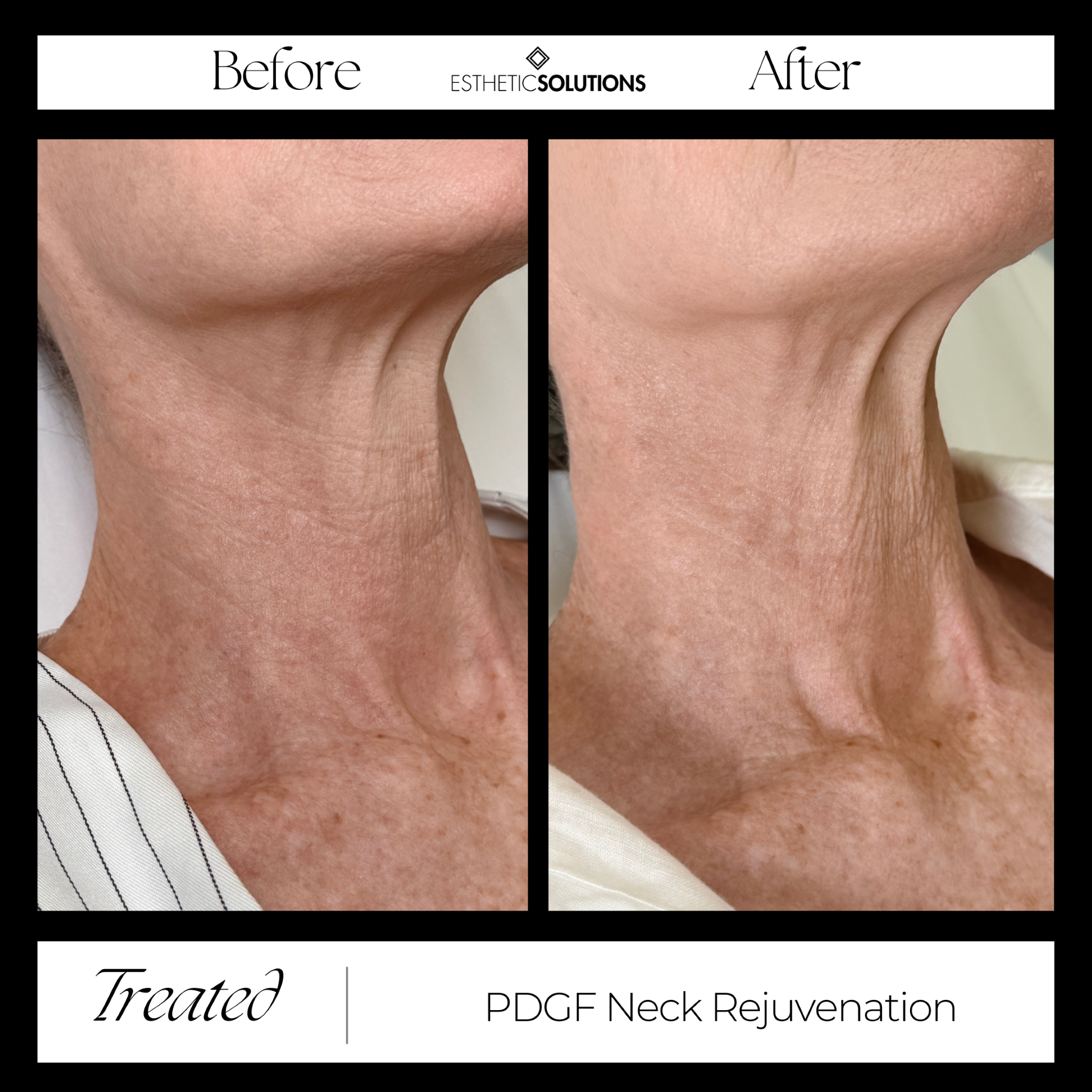
PDGF and Hyper-Dilute Radiesse for Neck Rejuvenation
The neck is one of the most underserved areas in aesthetics.
Patients often present with:
Crepey skin
Necklace lines
Skin thinning
Loss of elasticity
Early laxity
This is why I was so excited to incorporate PDGF combined with hyper-dilute Radiesse for neck rejuvenation to offer patients an alternative to surgery.
Traditional resurfacing treatments may improve texture superficially, but collagen depletion and structural deterioration often remain the underlying issue, which is where this service comes into play as a regenerative alternative to treat the neck.
Why Combine PDGF with Hyper-Dilute Radiesse
This combination creates a layered regenerative approach:
PDGF supports tissue regeneration and skin quality
Hyper-dilute Radiesse stimulates collagen production and structural support
Together, they help address:
Crepey neck skin
Fine lines and wrinkles
Skin laxity
Loss of dermal density
Why This Matters Clinically
The neck has thinner skin, repetitive movement patterns, and accelerated collagen depletion.
Aggressive correction can easily create unnatural texture or inconsistent outcomes.
Regenerative biostimulation allows injectors to focus on progressive tissue improvement rather than simply temporary correction.
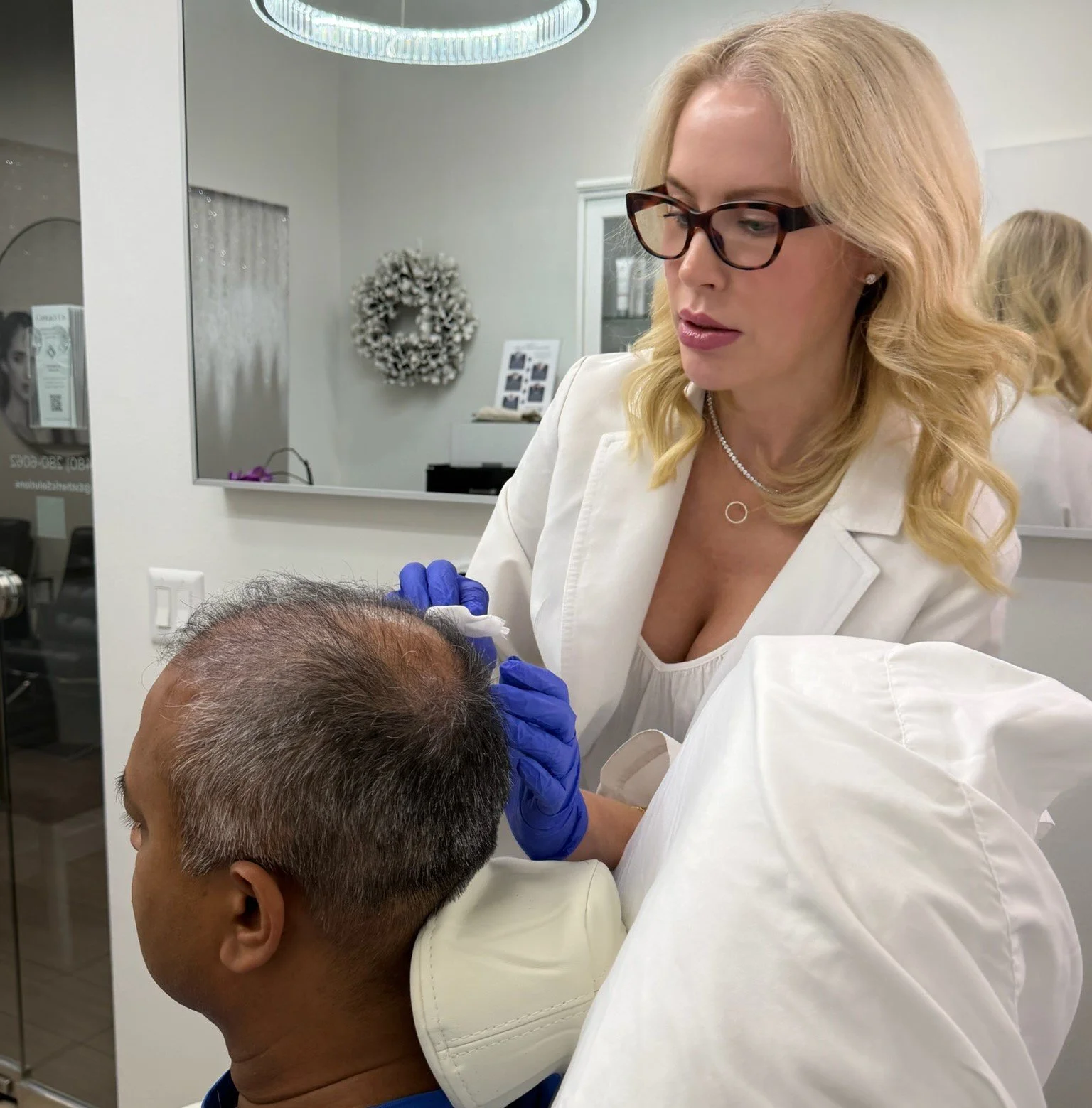
PDGF Hair Restoration Treatments
Hair restoration continues to grow rapidly within aesthetic medicine, which is why I decided to incorporate PDGF hair restoration as a treatment at Esthetic Solutions Premier Med Spa.
More patients are seeking non-surgical options for:
Hair thinning
Stress-related shedding
Hormonal hair loss
Age-related density loss
Postpartum shedding
How PDGF Supports Hair Restoration
PDGF works by supporting:
Hair follicle stimulation
Scalp circulation
Cellular repair within the scalp
Healthier hair growth cycles
This regenerative approach focuses on improving the scalp environment itself by injecting PDGF in the scalp to support hair growth.
Why Hair Restoration Fits Naturally into Aesthetic Treatments
Hair restoration is becoming a strong adjunctive service for aesthetic clinics because:
It expands regenerative offerings
It creates long-term treatment relationships
It addresses a growing patient concern
It complements wellness and longevity-based treatment models
For many injectors and med spa owners, regenerative hair restoration represents both a clinical and business growth opportunity.
Why Regenerative Aesthetics Is Reshaping the Industry
The future of aesthetics is moving beyond volume alone.
Patients increasingly want:
Prevention over correction
Tissue quality improvement
Natural-looking outcomes
Longevity-focused treatment plans
Regenerative solutions
This does not eliminate traditional filler or neuromodulators.
But it does expand how we think about treatment planning.
The injectors who understand regenerative medicine, collagen stimulation, and tissue quality will be better equipped to adapt as patient preferences continue evolving.
Clinical Perspective: The Importance of Patient Selection
Not every patient is a candidate for every treatment.
One of the biggest mistakes injectors make is forcing the same solution onto every concern.
Sometimes volume is appropriate.
Sometimes the issue is tissue quality.
Sometimes the patient requires combination treatment.
The ability to recognize the difference is what separates advanced injectors from algorithm-based injecting.
PDGF is not about replacing everything else.
It is about giving injectors another tool to create more customized, anatomy-driven treatment plans.
Final Thoughts on PDGF in Aesthetic Medicine
Regenerative aesthetics is no longer a future trend.
It is already reshaping patient expectations and treatment planning inside aesthetic practices.
PDGF offers injectors the ability to approach:
Tear trough rejuvenation
Neck rejuvenation
Hair restoration
Tissue quality improvement
through a more regenerative and biologically aligned lens.
For injectors looking to evolve beyond volume-only treatment strategies, understanding how regenerative therapies integrate into clinical practice is becoming increasingly important.
Learn More About Incorporating PDGF Into Your Treatments
If you want to learn more Train with Emily Tryon and learn first-hand how to incorporate PDGF into your med spa for tear trough rejuvenation, neck rejuvenation, and hair restoration. Click here to access Emily’s PDGF Guide.