
Your patient's face doesn't stop at the jawline. Neither should your assessment.
In aesthetic medicine, we spend considerable time evaluating facial anatomy, restoring volume, softening wrinkles, and creating balanced, natural-looking results. Yet one of the most revealing areas of aging is frequently overlooked during consultations: the neck.
Recently, I was consulting with a patient who came in for her usual Botox® and dermal filler refresh. Her face looked beautiful, but as we talked, I noticed something that deserved attention.
Her neck was telling a different story.
The prominent platysmal bands, horizontal lines, and changes in skin texture were noticeably different from the rejuvenated appearance of her face.
She hadn't mentioned her neck because she didn't realize treatment options existed.
When I brought it up, she responded:
"I thought that was just something I had to live with."
That moment illustrates one of the most important responsibilities we have as aesthetic injectors.
Our patients don't always know what's possible. They rely on our expertise to recognize concerns, explain appropriate options, and help them make informed decisions.
And when it comes to advanced neck rejuvenation, clinical knowledge and patient selection matter just as much as injection technique.
Why Neck Rejuvenation Deserves a Place in Every Aesthetic Consultation
The neck is one of the first areas where visible signs of aging can develop, yet it is often excluded from routine facial rejuvenation assessments.
As we age, changes in skin elasticity, collagen, muscle activity, and underlying tissue support contribute to several common aesthetic concerns:
Platysmal bands: Prominent vertical muscle bands that become more noticeable with movement or age.
Horizontal neck lines: Often called necklace lines, these creases may develop from repetitive movement, anatomy, and changes in skin quality.
Crepey neck skin: Thin, finely wrinkled skin associated with changes in elasticity and collagen.
Skin laxity: Loss of firmness and structural support that can affect the neck and jawline.
These concerns may appear together, but they don't necessarily respond to the same treatment.
That's why a comprehensive neck assessment is essential.
Advanced aesthetic treatment begins with understanding what you're treating, why it's occurring, and whether an injectable approach is appropriate.
Advanced Neck Rejuvenation: Different Concerns Require Different Treatments
One of the most important lessons for injectors is recognizing that neck rejuvenation is not a single procedure.
Muscle-related concerns, horizontal wrinkles, skin texture, and tissue laxity require different clinical considerations.
Platysmal Bands: Neurotoxin Treatment for Vertical Neck Bands
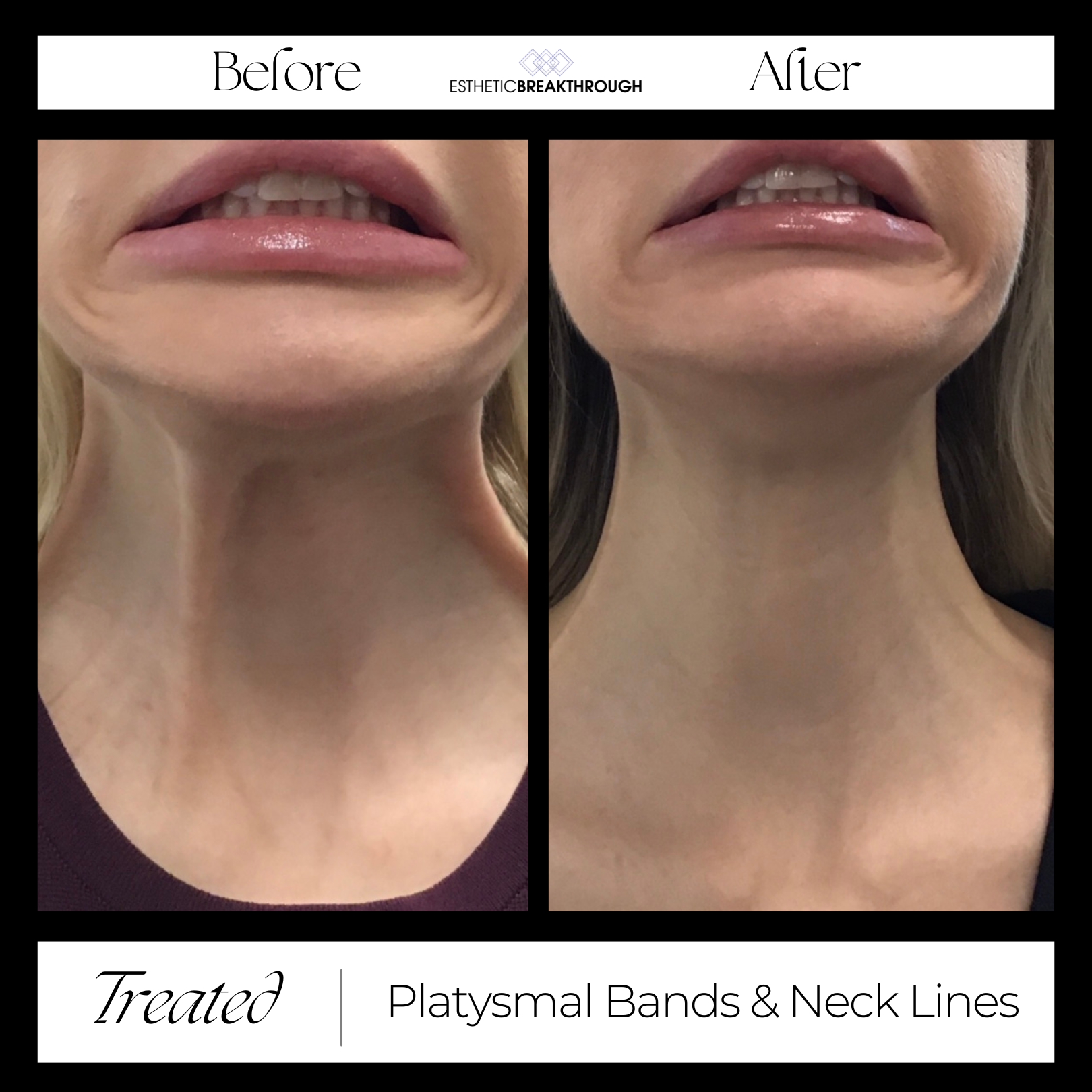
The platysma is a superficial muscle extending across the neck and lower face. As its activity becomes more visible, vertical bands may develop or become increasingly prominent.
For appropriately selected patients, botulinum toxin injections may help soften the appearance of platysmal bands by reducing targeted muscle activity.
However, treatment requires careful anatomical assessment, appropriate patient selection, and precise technique.
The platysma plays a role in lower facial movement, and improper injection placement or dosing can affect nearby muscles involved in speaking, swallowing, and other functions.
Not every patient with visible neck bands is an appropriate candidate.
Successful treatment begins with understanding muscle anatomy, evaluating the patient's concerns, and recognizing the limitations of neurotoxin treatment.
Horizontal Neck Lines: Addressing Necklace Lines and Skin Quality
Horizontal neck lines, commonly referred to as necklace lines, present a different challenge.
Unlike prominent platysmal bands, these lines may be influenced by skin structure, repetitive movement, and age-related changes in collagen and elasticity.
Advanced approaches being explored for neck rejuvenation include platelet-derived growth factor (PDGF) and hyper-dilute Radiesse®, depending on the patient's anatomy, skin condition, and treatment goals.
PDGF-based approaches are being investigated for their potential role in tissue repair and skin-quality improvement. Evidence for specific aesthetic neck applications remains limited, and results should not be assumed.
Hyper-dilute Radiesse, a calcium hydroxylapatite-based injectable, is used by experienced clinicians in selected skin-quality and collagen-stimulation applications. Its use for certain neck indications is off-label and requires advanced training and informed patient consent.
These treatments are not interchangeable, and neither is appropriate for every patient.
The injector's responsibility is to understand the available evidence, potential benefits, limitations, and risks before recommending a treatment plan.
Crepey Neck Skin: Looking Beyond the Surface
Crepey skin often reflects broader changes in dermal structure and elasticity.
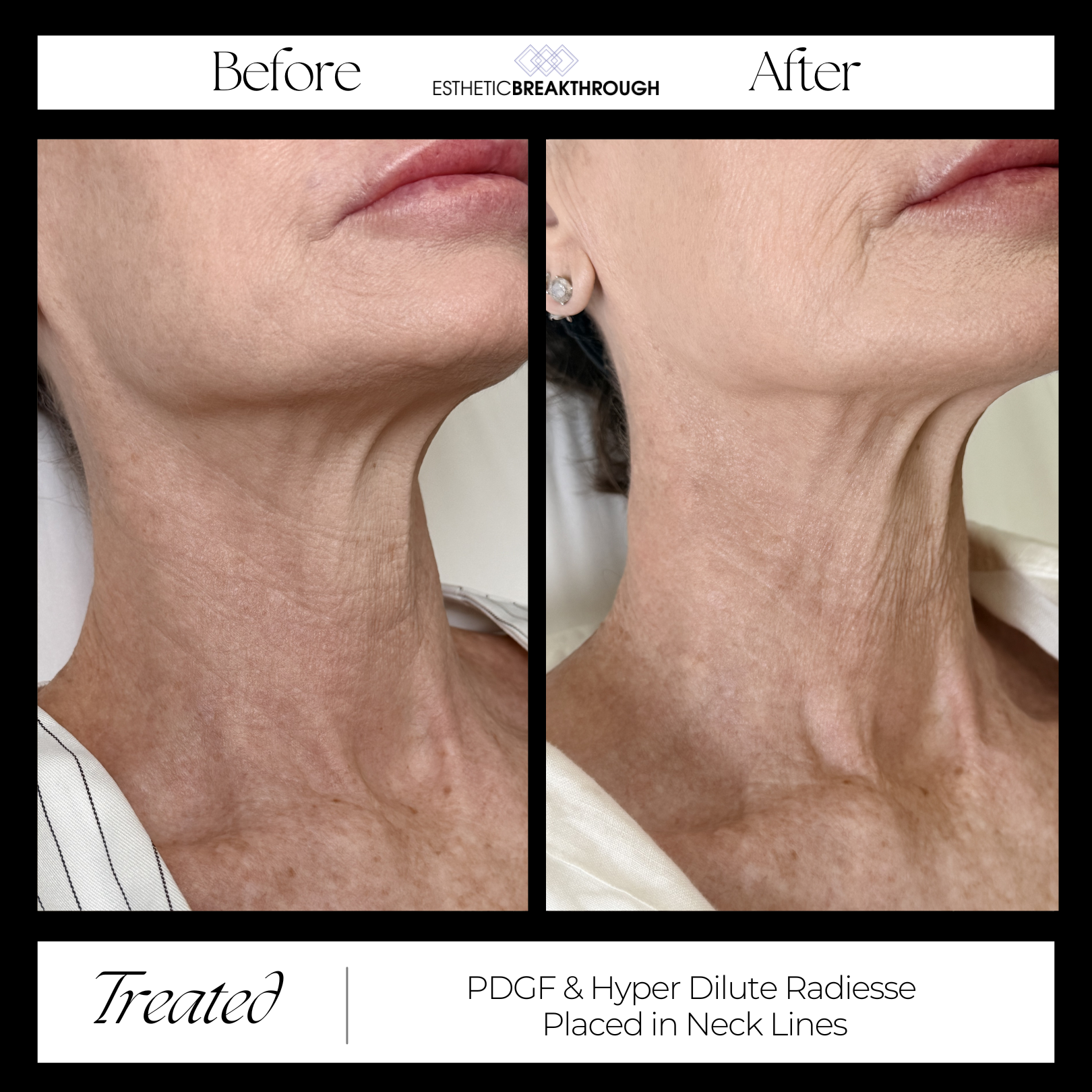
For some patients, combination treatment planning or referral for alternative modalities may be more appropriate than injectable treatment alone.
This is where advanced clinical assessment becomes particularly valuable.
A patient presenting with fine wrinkles and thinning skin may require a very different approach from someone whose primary concern is prominent muscle bands.
The goal isn't to treat every visible concern with a syringe. It's to identify the approach that best serves the patient.
Neck Botox, Nefertiti Lifts, and the Importance of Patient Selection
Social media has increased awareness of treatments such as the Nefertiti Lift, neck Botox, and non-surgical jawline rejuvenation.
But increased popularity doesn't make these procedures universally appropriate.
Why Anatomy Matters More Than Trends
A Nefertiti Lift generally refers to a botulinum toxin treatment approach targeting selected areas of the platysma to influence the appearance of the lower face and jawline.
However, patient anatomy, muscle activity, skin laxity, and underlying structural changes can significantly influence outcomes.
In some cases, reducing platysmal activity may provide an aesthetic improvement.
In others, the patient's primary concern may involve tissue laxity or structural changes that neurotoxin treatment cannot adequately address.
The ability to distinguish between these situations is essential.
Just because you can inject an area doesn't mean you should.
An experienced injector understands when to treat, when to recommend a different approach, and when to explain that a particular treatment is not appropriate.
That judgment is fundamental to patient safety and long-term trust.
The most valuable lesson isn't simply what changed. It's understanding why the treatment was appropriate in the first place.
Why Advanced Neck Rejuvenation Requires Hands-On Injector Training
Neck rejuvenation presents unique challenges because the anatomy, muscle function, skin characteristics, and treatment goals differ considerably from those of the face.
Injectors who want to expand their expertise must develop the ability to evaluate these factors together rather than approaching each concern in isolation.
Beyond Injection Technique: Building Clinical Confidence
Advanced injector training should strengthen the complete treatment process, including:
Comprehensive neck and lower-face assessment
Recognition of platysmal anatomy and muscle activity
Appropriate neurotoxin treatment planning
Evaluation of horizontal neck lines and skin-quality concerns
Understanding advanced regenerative and biostimulatory treatment options
Patient selection, contraindications, and complication awareness
Communicating treatment recommendations during consultations
Clinical confidence doesn't come from performing more injections alone.
It comes from understanding the anatomy, recognizing the limitations of available treatments, and developing the judgment to make informed decisions.
Master the Neck: Hands-On Training With Emily Tryon, RN
At Esthetic Breakthrough, advanced injector education goes beyond observing techniques.
Emily Tryon, RN, offers personalized, hands-on neck rejuvenation training for experienced cosmetic injectors who want to strengthen their assessment skills, refine their treatment planning, and expand their clinical knowledge.
With 13 years of experience building an aesthetics practice focused on individualized treatment and patient outcomes, Emily brings both clinical and business perspectives to her training.
What You'll Learn During Your Neck Training Day
During a customized, full-day training experience, participants have the opportunity to work directly with Emily on:
Comprehensive Neck Assessment
Learn how to incorporate the neck into your aesthetic consultations, recognize common aging concerns, and communicate appropriate treatment options with confidence.
Platysmal Band Treatment
Strengthen your understanding of platysmal anatomy, neurotoxin treatment considerations, and the importance of precise patient selection.
Horizontal Neck Lines and Skin Quality
Explore advanced treatment planning for necklace lines, crepey skin, and skin-quality concerns, including the clinical considerations surrounding PDGF and hyper-dilute Radiesse.
Patient Selection and Clinical Judgment
Develop the confidence to recognize appropriate candidates, understand treatment limitations, and know when an alternative recommendation is the better choice.
Training is tailored to the participant's experience, professional qualifications, and learning objectives.
Expand Your Expertise. Elevate Your Patient Consultations.
Your patients may not always recognize the opportunities for comprehensive facial and neck rejuvenation.
But as an aesthetic professional, you have the ability—and responsibility—to see the complete picture.
The most successful injectors don't simply respond to requests for individual treatments.
They listen, assess, educate, and develop thoughtful recommendations based on each patient's anatomy and goals.
Expanding your knowledge of neck rejuvenation can help you deliver more comprehensive consultations, strengthen patient relationships, and thoughtfully introduce additional treatment options into your practice.
Your patient's face doesn't stop at the jawline. Neither should your expertise.
Reserve Your Advanced Neck Rejuvenation Training Day
Ready to expand your clinical skills and learn advanced neck rejuvenation techniques directly from Emily Tryon, RN?
Explore customized, hands-on training designed to help experienced injectors strengthen their clinical knowledge, treatment planning, and patient assessment skills.
RESERVE YOUR NECK TRAINING DAY
Call 480-405-6338 to learn more.